SKETCH DOG: A Thoughtful Embroidery Design Review
As a designer who’s stitched hundreds of custom pieces—from boutique baby onesies to Etsy best-selling tote bags—I opened the SKETCH DOG embroidery file with quiet curiosity, not hype. This isn’t just another dog silhouette. It’s a hand-drawn-style graphic that lands somewhere between playful sketchbook charm and clean commercial readiness—and that balance matters deeply when you’re stitching for real people, real fabrics, and real expectations.
First Impressions: Light, Lively, and Intentionally Imperfect
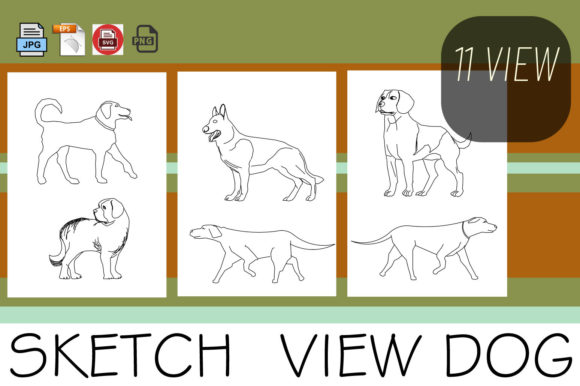
The moment I loaded SKETCH DOG into my digitizing software, I noticed its rhythm: uneven line weight, subtle tapering at the tail tip, slightly off-center ears, and an expressive, open-mouthed grin. It doesn’t try to be photorealistic or overly polished—it leans into its “sketch” identity with confidence. That makes it ideal for handmade products where authenticity and warmth matter more than pixel-perfect symmetry.
I immediately pictured it on a natural canvas tote bag—stitched in soft ecru thread on oat-colored linen-cotton blend. No heavy fill stitches. Just confident satin-stitched outlines and a few delicate running-stitch accents for whiskers and paw pads. It wouldn’t shout. It would invite a second look. And that’s exactly what builds connection with customers browsing craft fairs or scrolling Etsy listings.
Where SKETCH DOG Shines (and Where It Asks for Care)
SKETCH DOG works beautifully on medium-weight, stable fabrics: denim jackets, cotton tea towels, structured aprons, and midweight sweatshirts. Its open layout avoids dense stitch clusters, so it breathes well on knit fabrics—no puckering if you use light cutaway stabilizer and moderate tension.
- Custom apparel: On crewneck sweatshirts, it reads clearly at 3.5–4 inches wide—large enough to read from across a room, small enough to keep proportions balanced on a chest placement.
- Baby embroidery: Stitched in pastel thread on organic cotton onesies? Yes—but avoid the tiniest ear details if embroidering for under-6-month-olds; simplify or omit fine lines for safety and clarity.
- Embroidered patch: With its clean outer contour and minimal interior detail, SKETCH DOG presses flat and borders crisply. Great for iron-on or sew-on patches on backpacks or denim jackets.
- Holiday or wedding gifts: Pair it with minimalist typography (“Best Dog Ever”, “The Goodest Boy”) on linen pillow covers or ceramic mugs (via printable mockup)—it adds personality without overwhelming the piece.
But let’s be direct: SKETCH DOG isn’t built for every surface. Avoid it on highly textured fabrics like bouclé or thick terry cloth—the sketch-line delicacy gets lost. Skip curved caps unless you reduce size significantly and test hoop clearance first. And on dark fabric? Check contrast carefully: light gray or cream thread may vanish. Stick with charcoal, navy, or black thread for legibility—or invert the design for negative-space stitching.
What It Adds to Your Finished Product (Beyond Cuteness)
When you choose SKETCH DOG, you’re choosing tone as much as image. It signals approachability, craftsmanship, and gentle humor—not corporate polish or mass-produced slickness. That distinction lifts perceived value for handmade product buyers. A customer paying $48 for an embroidered linen tea towel doesn’t just want utility—they want story, care, and intention. SKETCH DOG delivers that quietly.
For Etsy sellers and small shop owners, it also supports brand consistency. Use it across multiple product types—tote bags, baby blankets, greeting cards (via the included SVG/JPG), even digital design assets for social posts—and the visual thread remains cohesive. It’s versatile without being generic.
Practical Designer Notes Before You Stitch
Before sending SKETCH DOG to your machine or listing it in your shop, take these five minutes:
- Test on scrap fabric—same type and color as your final project. Watch how thread lays on stretchy knits versus rigid canvas.
- Check stitch density in your embroidery software. If fill areas feel heavy (unlikely here, but verify), adjust underlay or reduce density by 5–10%.
- Confirm hoop size compatibility. The design likely fits comfortably in a 4x4 hoop, but double-check before hooping expensive fabric.
- Inspect small details—especially the nose curve and inner ear line. If they’re too thin for your machine’s minimum stitch length, tweak them manually or simplify.
- Review licensing terms included in the .zip folder. Since this is labeled a Graphics file for Crafts, confirm whether it permits commercial embroidery use, resale of finished items, or redistribution of the digital embroidery file.
Also: run a black-and-white mockup. Does the shape hold up without color? Does it scale cleanly down to 2.5 inches for a cap front? Does it still read as “dog”—not just “abstract shape”—on a busy fabric print? These checks separate thoughtful execution from hopeful guessing.
Final Thought: Not Just a Design—A Design Decision
SKETCH DOG won’t solve every embroidery challenge. It won’t replace complex applique designs for quilt blocks or ultra-detailed portraits for gallery wall art. But for makers who value clarity, warmth, and smart simplicity—it’s a grounded, reliable choice.
It’s the kind of design that feels intentional in a gift box, trustworthy on a boutique shelf, and quietly professional in a client’s email preview. Whether you’re stitching for a local dog rescue fundraiser or building a full line of pet-themed craft business products, SKETCH DOG earns its place—not because it’s flashy, but because it’s honest, adaptable, and made to be lived with.
If your next project needs personality without pretense—if it’s meant to be held, gifted, used daily, and loved quietly—SKETCH DOG is worth your time, your thread, and your attention.