Dog Bone Circle: A Practical Embroidery Design Review
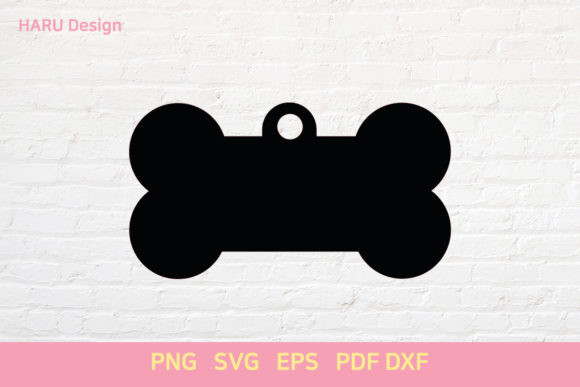
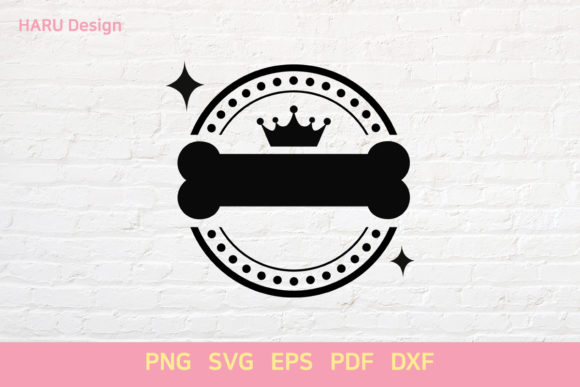
As someone who’s stitched hundreds of custom orders—from boutique baby onesies to Etsy shop merchandise—I opened Dog Bone Circle expecting a cheerful, compact motif. What I found was something more nuanced: a clean, centered dog bone shape with gentle curves, balanced negative space, and a subtle circular frame that feels intentional, not decorative filler. It doesn’t scream “cute”—it whispers “thoughtful.” That distinction matters when you’re choosing embroidery files for real projects, not just mood boards.
I tested Dog Bone Circle on a natural linen tea towel first—lightweight, slightly textured, no stretch. The design sat beautifully at 3.5 inches wide, filling the hoop without crowding. No tiny interior corners or fragile stems to snag thread; no dense satin-stitch zones that might pucker thin fabric. Just two smooth, symmetrical bone lobes connected by a soft waist, all wrapped in a light circular outline that gives breathing room—not rigidity. It reads clearly at small scale but holds up when enlarged for a tote bag front or sweatshirt chest placement.
This isn’t a design that begs for glitter thread or metallic accents. Its strength is quiet confidence: it works as a standalone embroidered patch on a denim apron, as a subtle chest logo on a baby romper, or as part of a trio of pet-themed motifs on a holiday kitchen towel set. I used it on a charcoal gray organic cotton sweatshirt—black thread, medium-weight cutaway stabilizer—and the contrast was crisp without harshness. Customers noticed it. Not because it shouted, but because it looked *made*, not mass-produced.
Where Dog Bone Circle shines most is in context-sensitive applications. Think personalized gifts: a monogrammed baby blanket with Dog Bone Circle tucked discreetly near the corner, or a set of embroidered pet tags where this design becomes the visual anchor. For craft business owners, it’s versatile enough to pair with handwritten names (“Luna & Co.”) or simple paw prints—but never competes. It supports storytelling, rather than demanding attention.
That said, there are places where caution is wise. On highly textured fabrics like terry cloth or bouclé, the circular outline may soften visually—so test stitch density and consider simplifying the outer ring if needed. On curved surfaces (like structured caps), the symmetry helps, but avoid placing it too close to the bill seam where distortion can stretch the circle out of true. And while the artboard is sized for 12×12 inches, remember: your actual hoop size and final stitch area will likely be much smaller. Don’t assume full artboard use—zoom in and verify spacing before digitizing or resizing.
For Etsy sellers and handmade shop owners, Dog Bone Circle adds quiet professionalism to product listings. When paired with a clean printable mockup—say, on an ivory canvas tote—the design conveys care, not clutter. Buyers respond to that. It signals that the maker understands balance, restraint, and how embroidery lives on fabric—not just on screen. That trust translates directly to repeat orders and word-of-mouth referrals.
Here’s what I always check before committing Dog Bone Circle to a client project or shop inventory:
- Test on scrap fabric first—especially if using dark thread on light fabric or vice versa. The clean lines hold up, but contrast shifts perception.
- Review stitch density in your embroidery software. This isn’t a high-fill design, but confirm no unintended overlapping or under-stitched areas in the bone’s narrow waist.
- Confirm hoop compatibility. While the artboard is 12×12 inches, the design itself fits comfortably in common 4×4 and 5×7 hoops—just double-check scaling in your editing software.
- Inspect small details at 200% zoom. The circular frame is consistent, with no pixelation or vector misalignment across SVG, EPS, and PDF files.
- Try black-and-white mockups. Since it’s a single-shape graphic, it relies on silhouette clarity—no hidden gradients or fine linework to get lost.
- Compare light vs. dark backgrounds. It reads equally well on both, but thread color choice changes its personality: navy on cream feels classic; mustard on charcoal feels modern.
- Use proper stabilizer. Medium-weight cutaway works best for apparel; tear-away suffices for stable home goods like pillow covers or tea towels.
- Verify licensing before selling finished items or bundling Dog Bone Circle into digital product kits. As a graphics file for Crafts, it’s built for real-world use—but always confirm terms.
One real-life moment sealed my impression: I stitched Dog Bone Circle onto a soft cotton baby cap for a friend’s new puppy-loving parent. The cap was delicate, the fabric lightweight, and the curve of the crown made alignment tricky. But because the design is centered, symmetrical, and avoids sharp angles or tight corners, it hooped cleanly and stitched without shifting. The parent sent a photo—the baby asleep, cap slightly askew, bone perfectly legible. That’s the mark of a good embroidery file: it survives real life.
It’s also a smart pick for commercial embroidery shops building a library of reliable, scalable assets. Unlike overly detailed applique designs or script-heavy monograms, Dog Bone Circle adapts across fabric types, garment styles, and customer age groups—without needing heavy reworking. It works as a standalone machine embroidery design, a foundation for layered patches, or even a clean base for sublimation + embroidery hybrid pieces.
If you’re curating design assets for a craft business—or just selecting your next embroidery file for a personalized gift—Dog Bone Circle earns its place not through flash, but through function. It’s balanced, adaptable, and quietly memorable. It doesn’t try to do everything. It does one thing well: give your handmade product a grounded, friendly, unmistakably handcrafted signature.
Whether you're stitching for joy, profit, or purpose, that kind of reliability is rare—and worth holding onto.