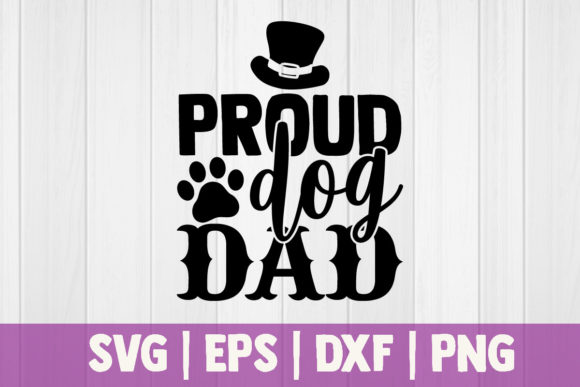
Proud Dog Dad
First Impressions: Warm, Clean, and Instantly Relatable
Opening Proud Dog Dad for the first time, I didn’t see just another digital graphic—I saw a ready-made moment of connection. The layout is balanced but not stiff: a friendly dog silhouette anchors the phrase with confident, rounded lettering that feels hand-drawn but precise. There’s no clutter, no overwrought detail—just warmth, pride, and quiet personality. It lands somewhere between heartfelt and approachable, which makes it ideal for handmade products where authenticity matters more than flash.
A Real-World Test: Embroidering a Linen Tote Bag for a Local Pet Boutique
Last week, I prepped Proud Dog Dad for a custom linen tote bag order from a neighborhood pet boutique. Their customers love locally made, thoughtful gifts—and they’re willing to pay more for something that feels personal, not mass-produced. I chose a medium-weight natural linen, paired it with tear-away stabilizer, and stitched the design in soft navy thread on an off-white base. The result? Crisp, legible, and full of charm—no bleeding, no puckering, and the satin-stitched outline held beautifully around the dog’s ear and tail. Customers loved how it read clearly at arm’s length but still felt handmade up close.
Where It Shines (and Where It Needs Thought)
Proud Dog Dad works exceptionally well for:
- Custom apparel: Sweatshirts, crewnecks, and relaxed-fit tees—especially when placed left-chest or centered on the back.
- Tote bag design: Its clean shape and moderate width fill space without overwhelming canvas or linen.
- Baby embroidery: On onesies or burp cloths, it reads sweetly—not too bold, not too busy.
- Embroidered patch: As a standalone motif, it stitches cleanly at 3–4 inches wide and holds up well on twill or denim backing.
- Holiday embroidery: Think “stocking stuffers” or “dog-themed Christmas gifts”—it adds personality without seasonal cliché.
But here’s where attention matters:
- Small hoop sizes: Below 4 inches wide, the letter spacing tightens and the dog’s features soften. Test before committing to a 3-inch hoop.
- Textured fabrics: On heavy terry cloth or bouclé, reduce stitch density slightly—or add cutaway stabilizer beneath tear-away for support.
- Thin or stretchy fabric: Always pair with medium-weight cutaway stabilizer. Running stitch outlines can waver if the base shifts.
- Dark fabric: The design relies on contrast. On charcoal or navy, use bright white or light gray thread—and preview digitally first.
- Curved surfaces: Caps or beanies require repositioning and possibly slight scaling. Don’t force it onto a small front panel without checking fit in your embroidery software.
What It Adds to Your Finished Product
Proud Dog Dad doesn’t just decorate—it communicates. When stitched on a kitchen towel for a new dog owner, it says, “I get you.” On a baby blanket, it hints at family continuity, not just pet ownership. That emotional resonance lifts perceived value: customers describe it as “the perfect gift I didn’t know I needed.” For Etsy sellers and craft fair vendors, that translates directly into stronger buyer engagement and repeat orders. And because it avoids trend-driven visuals (no glitter, no neon, no dated fonts), it stays relevant across seasons and shop refreshes.
Design Integrity Matters—Here’s How to Protect It
Before stitching Proud Dog Dad into a client project or batch-producing items for your craft business, do these six things:
- Test on scrap fabric—same type, same stabilizer, same thread colors you’ll use.
- Check thread color contrast in both natural and artificial light. What reads well on screen may vanish on dark cotton.
- Review stitch density in your embroidery software. If fill areas look overly dense, adjust underlay or reduce density by 5–10%.
- Confirm hoop size compatibility. Since this is a digital embroidery file meant for Cricut Design Space, Silhouette Studio, and similar platforms, verify the native dimensions match your machine’s working area.
- Inspect small details—especially the curve of the dog’s tail and inner letter counters. These are often where tiny gaps or overlapping stitches appear.
- Use proper stabilizer for your fabric category. Skipping this step turns a polished machine embroidery design into a lumpy, uneven finished product.
Licensing & Commercial Use: A Quick Reality Check
This listing falls under Crafts and Graphics, and the description confirms it’s a digital embroidery file for immediate download. But—and this is critical—Proud Dog Dad is only safe for commercial embroidery projects if its license explicitly permits resale of physical items. Always confirm that before listing embroidered sweatshirts or patches on Etsy or in your small shop. Likewise, if you plan to resell the file itself (e.g., as part of a bundle), double-check whether redistribution rights are included. When in doubt, contact the creator. Clarity here protects your reputation—and your bottom line.
Final Thought: A Design That Serves the Maker, Not Just the Machine
Proud Dog Dad isn’t flashy. It won’t win awards for technical complexity. But it delivers what experienced designers and craft business owners actually need: clarity, consistency, and emotional resonance—all wrapped in a file that behaves predictably across machines and materials. Whether you’re stitching a single personalized gift or producing 50 tote bags for a local shop launch, it holds up. That reliability is rare. And in the world of handmade product creation, it’s worth more than any extra flourish.