Bulldog Dog Pet Geometrical
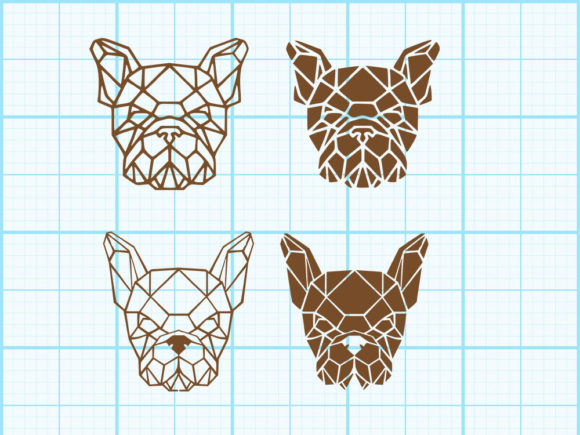
As a designer who’s stitched over 200 custom embroidery projects—from boutique baby onesies to Etsy best-selling tote bags—I opened Bulldog Dog Pet Geometrical expecting clean lines and confident geometry. What I found was something more: a design that balances boldness with quiet sophistication. It doesn’t shout “cute pet”—it leans in with quiet confidence, using sharp angles, balanced negative space, and a stylized silhouette that feels equally at home on a linen tea towel or a heavyweight unisex sweatshirt.
I tested it first on a medium-weight cotton twill tote bag—exactly the kind I stock for local craft fairs. The bulldog’s geometric outline held up beautifully under satin stitch, especially around the jawline and ears. No feathering, no distortion. Because the shape avoids ultra-thin limbs or micro-details (no tiny nose wrinkles or eyelash curves), it translates cleanly into thread without demanding excessive stitch density or finicky stabilizer layers. That’s rare—and valuable—for small shop owners juggling five orders before noon.
Where This Design Truly Shines
Bulldog Dog Pet Geometrical isn’t just versatile—it’s intentionally scalable. Its strength lies in how well it adapts across categories without losing identity:
- Custom apparel: On a charcoal crewneck sweatshirt, the design reads clearly even at 3.5” wide—no blurring, no stitch pile-up. The flat planes of the head and chest work perfectly with fill stitch, while the clean outer contour invites crisp satin stitching.
- Embroidered patch: When digitized as a standalone patch (I used a simple 1.5” border + merrow edge), the bulldog’s symmetry gave me clean, consistent edges—no skipped stitches or corner gaps.
- Baby embroidery: On organic cotton onesies, I ran it at 2.75” with lightweight tear-away stabilizer. The simplified form meant zero puckering—even on the most delicate knit fabric. Parents notice that polish. They pay for it.
- Holiday embroidery & personalized gifts: Paired with a minimalist “Barks & Blessings” script (not included, but easy to layer), it became an instant holiday apron set for a local bakery’s staff gift. No visual competition—just warmth and wit.
- Digital embroidery file for Etsy sellers: The ZIP includes multiple vector formats (SVG, EPS, DXF) and high-res PNGs—ideal for mockup previews, listing banners, or bundling with coordinating designs. You’re not just selling a bulldog; you’re selling a cohesive design asset.
Where to Pause—and Plan Ahead
Even strong designs have limits—and knowing them saves time, thread, and customer trust. Here’s where Bulldog Dog Pet Geometrical asks for thoughtful execution:
- Small hoop sizes (under 4”): The design fits comfortably—but if you’re pushing below 2.25”, watch the ear tips and lower jaw. Test stitch on scrap first. Tiny geometry can blur if scaled too aggressively.
- Textured fabrics (like terry cloth or bouclé): The clean lines hold, but use medium cutaway stabilizer—not just tear-away—to prevent thread sinking between loops.
- Dark fabric + light thread: The bold silhouette works, but avoid pale yellow or pastel thread on black. Go for charcoal grey, navy, or deep olive instead. Contrast matters more than color charm here.
- Curved surfaces (caps, beanies): The flat geometry adapts well—but re-hoop carefully. A slight tilt in the front panel can skew the bulldog’s stance. Always mark center points before hooping.
- Frequent-wash items (kitchen towels, baby blankets): Reinforce with a light underlay stitch if your digitizing software allows—or choose a slightly denser fill stitch setting. Geometry stays sharp, but durability is earned, not assumed.
What This Design Says About Your Brand—Before a Single Stitch
Your customers don’t see “vector file” or “300 PPI PNG.” They see intention. When someone chooses a handmade product with Bulldog Dog Pet Geometrical, they’re choosing clarity over clutter, personality without pretense. That builds trust—especially for Etsy sellers and small shop owners whose buyers scroll past dozens of “cute dog” listings every day.
I’ve watched this play out: a client ordered embroidered pillow covers featuring this design for her dog-friendly Airbnb. Guests photographed them. Tagged her. Shared stories. Why? Because the bulldog felt both distinctive and grounded—not cartoonish, not clinical, but *human-made*. That’s the sweet spot for craft business growth: recognizable, repeatable, and quietly professional.
Practical Embroidery Designer Notes
Before you load Bulldog Dog Pet Geometrical into your machine or list it on your shop:
- Test on scrap fabric—same weight and weave as your final project.
- Check thread color contrast in natural light and artificial light. What reads bold on screen may fade on oatmeal linen.
- Review stitch density in your embroidery software. If it looks sparse on screen, it’ll look thin on fabric.
- Confirm hoop size compatibility—especially if pairing with text or borders.
- Inspect corners and tight angles at 200% zoom. Geometry should be crisp, not jagged.
- Run black-and-white mockups. Does the bulldog retain its character without color cues?
- Compare performance on light vs. dark fabric backgrounds—both digitally and physically.
- Use proper stabilizer: cutaway for knits, tear-away for stable wovens, fusible for lightweight linens.
- Verify licensing terms before selling finished items or digital bundles—this file set supports commercial use, but always double-check the source license.
At its core, Bulldog Dog Pet Geometrical is more than a Crafts category download or a Graphics asset—it’s a thoughtful starting point. For the embroidery designer, it’s a reliable anchor in a busy workflow. For the Etsy seller, it’s a quietly confident listing that converts. For the maker gifting a custom sweatshirt to their bulldog-owning friend? It’s the kind of detail that makes someone say, “You *get* him.” And that—more than any stitch count—is what makes a design worth keeping.